
India’s rapid shift towards digital payments and online financial services has created enormous convenience for consumers. At the same time, it has created new opportunities for cybercriminals. Financial fraud is increasingly driven by social engineering, impersonation, malicious applications, phishing links and sophisticated digital scams designed to manipulate victims into voluntarily transferring money or revealing sensitive information.
Recent developments demonstrate how quickly these methods are evolving. In August 2026, the Indian Cyber Crime Coordination Centre (I4C) identified websites hosted on Google’s Firebase platform that were allegedly being used to impersonate banks, distribute malware and steal financial information. Reuters reported that at least 57 Firebase-hosted sites were identified in August alone as part of the government’s efforts to disrupt such scams.
Digital Scams Are Becoming More Sophisticated
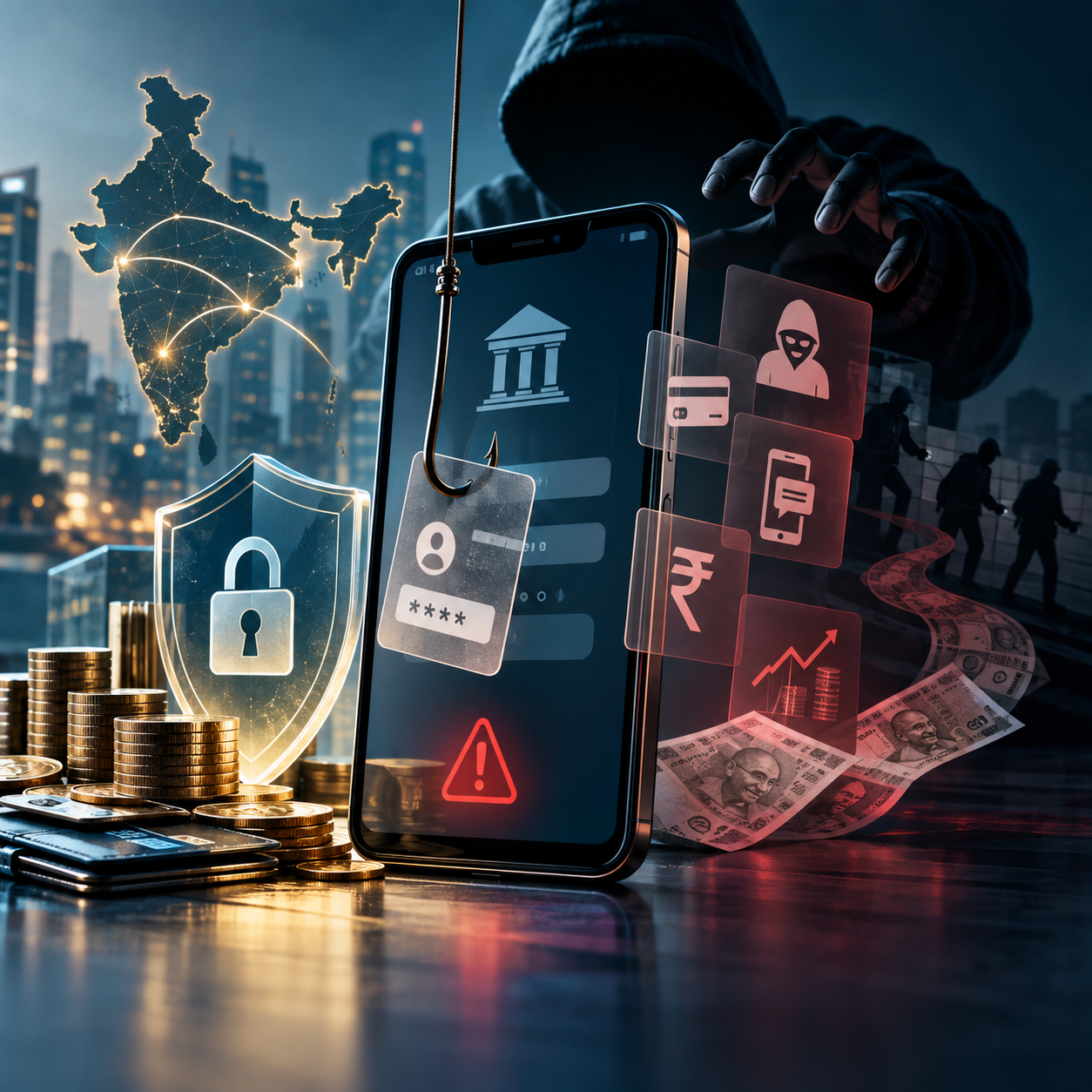
Traditional phishing emails are no longer the only threat. Fraudsters increasingly use convincing websites, fake mobile applications, social media advertisements and messaging platforms to establish credibility.
A recent warning from I4C highlighted malicious Android applications promoted through social media advertisements. These applications were disguised as legitimate services and could abuse accessibility permissions to obtain control over a victim’s device and potentially facilitate financial theft.
Other common scams include digital arrest fraud, investment scams, fake loan applications, e-challan scams, impersonation fraud and account-takeover attacks. The Government has specifically identified digital arrest, investment scams, malware, fake loan apps and fraudulent social media advertisements among the methods being targeted through its cybercrime awareness initiatives.
The Rise of Mule Accounts
Financial fraud does not end with the victim’s first transaction. Fraudsters frequently move stolen funds through mule accounts—bank accounts used to receive and transfer illicit proceeds.
To address this problem, I4C has developed mechanisms to share information on suspected identifiers and mule accounts with banks and financial institutions. According to Government data, by January 2026, more than 27.37 lakh Layer-1 mule accounts had been shared with participating entities, with transactions worth more than ₹9,518 crore reportedly declined through the Suspect Registry.
This reflects a growing emphasis on identifying suspicious transactions and disrupting fraudulent money flows rather than relying solely on investigation after money has disappeared.
What Should Victims Do?
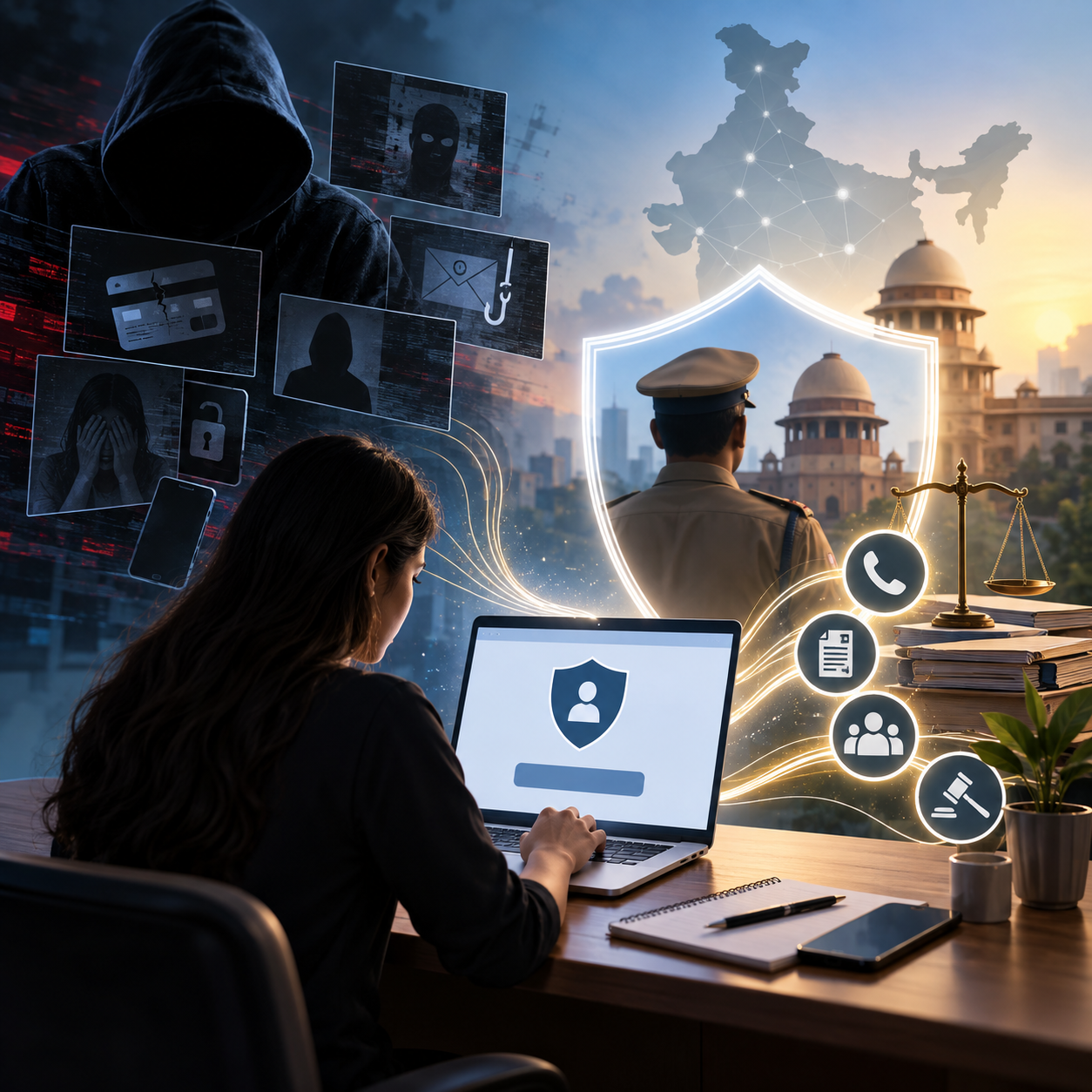
Speed is critical when financial fraud occurs. The Government’s Citizen Financial Cyber Fraud Reporting and Management System (CFCFRMS) is designed to facilitate immediate reporting and help prevent fraudulent funds from being siphoned away.
Individuals who experience financial cyber fraud should immediately contact 1930, the national helpline for reporting financial cyber fraud, and file a complaint through the National Cybercrime Reporting Portal.
Victims should also immediately notify their bank or payment service provider, preserve transaction details, screenshots, phone numbers, messages and other evidence, and avoid communicating further with the fraudster.
Preventing Digital Financial Fraud
Prevention remains the strongest defence. Individuals should avoid downloading applications from unverified sources, clicking suspicious links or sharing OTPs, PINs, passwords and banking credentials.
Businesses should implement multi-factor authentication, employee awareness programmes, transaction monitoring, access controls and incident-response procedures. Financial institutions and technology platforms must also continuously assess emerging fraud patterns and strengthen their detection mechanisms.
Conclusion
Cybercrime is evolving alongside India’s digital economy. The increasing use of malicious applications, impersonation, social engineering and mule accounts shows that financial fraud is becoming more organised and technologically sophisticated.
For individuals and businesses alike, awareness, rapid reporting and strong security controls are essential. Digital convenience can only remain sustainable when it is accompanied by equally strong measures to protect users, transactions and financial systems.