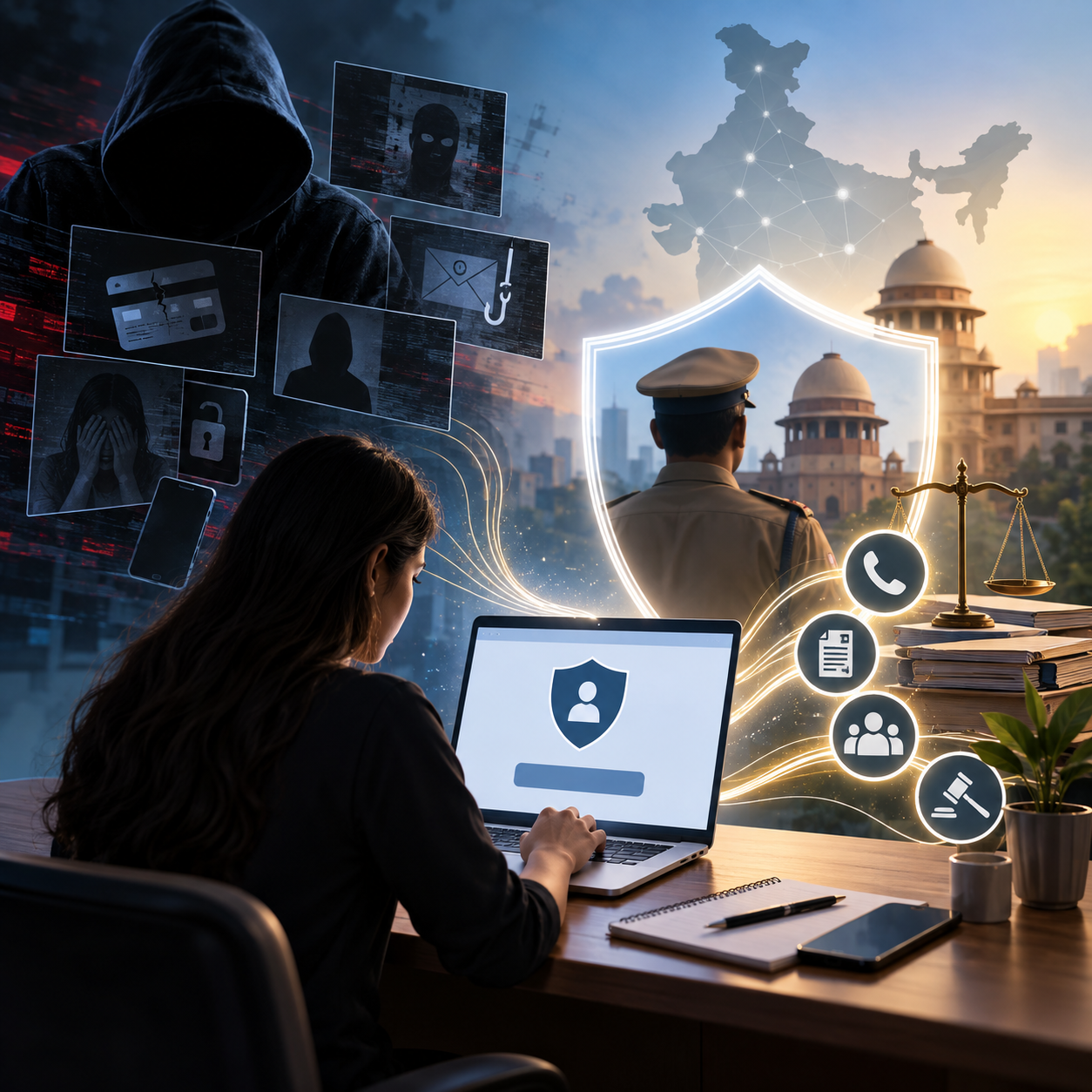

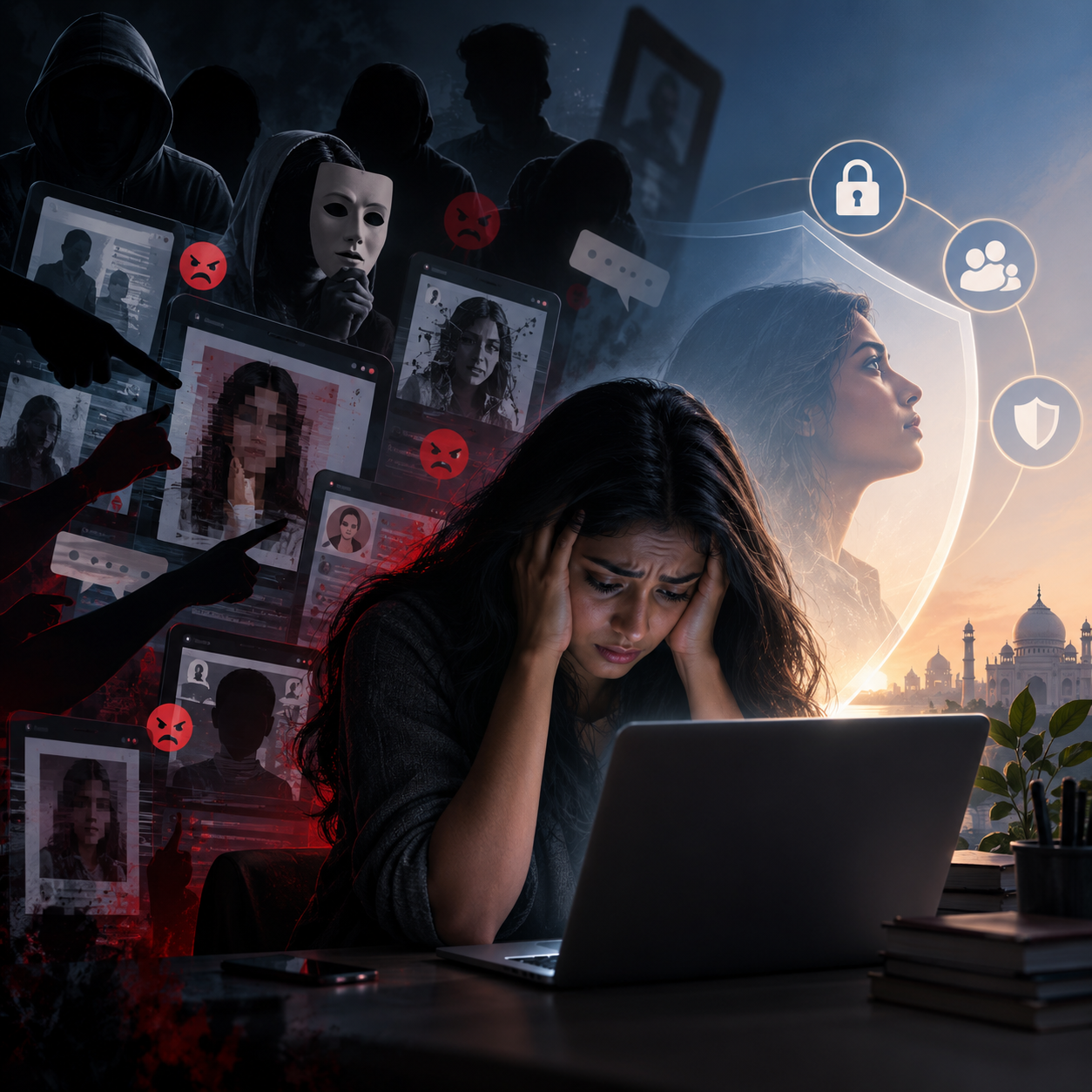
The internet has transformed how people communicate, work and express themselves. However, the same digital platforms can also be used to harass, threaten, impersonate and intimidate individuals. Cyber harassment and online abuse have become increasingly significant forms of cybercrime, particularly affecting women, children and public-facing individuals.
The scale of the problem is reflected in recent data from India’s National Cybercrime Reporting Portal (NCRP). Government data for 2025 recorded 46,784 complaints involving fake or impersonating profiles, compared with 15,843 in 2021. Profile hacking and identity-theft complaints also reached 34,533 in 2025.
What Constitutes Cyber Harassment?
Cyber harassment can take many forms. It may include repeated unwanted messages, cyberstalking, threatening communications, impersonation, publication of private information, abusive comments, doxxing, non-consensual sharing of intimate material and coordinated online attacks.
Social media platforms can make such conduct particularly damaging because harmful content can be rapidly shared, copied and circulated to large audiences. Even after the original post is removed, screenshots or copies may continue to exist elsewhere.
Online abuse can also extend beyond traditional social media. Harassment may occur through messaging applications, email, gaming platforms, dating applications, discussion forums and other digital services.
Increasing Risks for Women and Children
Women and children remain particularly vulnerable to technology-facilitated abuse. Recent Government data shows substantial growth in several categories of online and social-media-related crime. Fake or impersonating profile complaints, for example, increased significantly between 2021 and 2025.
Child safety is also an important concern. The Government has specifically designed the National Cybercrime Reporting Portal to facilitate reporting of all types of cybercrime, with particular focus on crimes against women and children.
Educational and awareness initiatives have also expanded. UNESCO and NCERT launched a programme in India to equip educators with tools to address online violence affecting children, highlighting the growing recognition of digital abuse as a serious safety issue.
Impersonation and Identity Abuse
One increasingly common form of online abuse is the creation of fake or impersonating profiles. A perpetrator may use another person’s photograph, name or other identifying information to create a fraudulent account.
Such accounts may be used to damage someone’s reputation, contact their friends or colleagues, solicit money, spread false information or engage in further harassment.
Identity theft and account compromise can make the situation even more serious. Once an attacker gains access to an account, they may use existing conversations, photographs or contacts to make fraudulent communications appear credible.
Deepfakes and Emerging Technology
Artificial intelligence has added another dimension to online abuse. Deepfake technology can be used to manipulate photographs, videos or audio and create misleading content involving real individuals.
The growing availability of such tools makes it increasingly important for individuals and platforms to respond quickly when manipulated content is used for harassment, impersonation or reputational harm.
What Should Victims Do?
Victims should avoid deleting evidence immediately. Screenshots, URLs, usernames, messages, emails, timestamps and other digital records can assist with investigation.
Where appropriate, victims should report abusive content to the platform, block the offending account and secure their own accounts by changing passwords and enabling multi-factor authentication.
Cybercrime can also be reported through India’s National Cybercrime Reporting Portal, which is operated under the Indian Cyber Crime Coordination Centre (I4C). Complaints submitted through the portal are handled by the relevant State or Union Territory law-enforcement authorities.
If there is an immediate threat to personal safety, contacting the local police or emergency services should take priority.
Conclusion
Cyber harassment is not simply an unpleasant online experience. Persistent stalking, threats, impersonation, identity theft and the non-consensual distribution of harmful content can have serious real-world consequences.
As digital platforms become increasingly integrated into everyday life, online safety must be treated as a core aspect of personal security. Greater awareness, prompt reporting, stronger platform safeguards and effective law-enforcement mechanisms are essential to ensuring that digital spaces remain accessible without becoming environments for intimidation and abuse.