

One Step LawOne Step Law
  • Data Privacy
    • DPDP Act
      • DPDP Act and Rules
      • Consent Guidelines
      • Data Fiduciary Obligations
      • Data Processor Obligations
      • Data Protection Board of India
      • Cross Border Data Transfer
      • Data Breach Notifications
    • UAE PDPL
    • KSA PDPL
    • Sector-specific privacy (health, ed-tech, fintech)
    DPDP Act
    • DPDP Act
    • DPDP Act and Rules
    • Consent Guidelines
    • Data Fiduciary Obligations
    • Data Processor Obligations
    • Data Protection Board of India
    • Data Breach Notifications
    UAE PDPL
    • UAE PDPL
    • KSA PDPL
    • Sector-specific privacy (health, ed-tech, fintech)
    Latest Posts

    Sector-Specific Data Privacy: Education and the DPDP Act

    6 Min Read

    Sector-Specific Data Privacy: Healthcare and the DPDP Act

    6 Min Read

    KSA PDPL Compliance: Key Obligations for Businesses

    6 Min Read

    KSA PDPL: Understanding Saudi Arabia’s Personal Data Protection Law

    6 Min Read

    UAE PDPL Compliance: What Businesses Need to Know

    7 Min Read

    UAE Personal Data Protection Law: Understanding the UAE PDPL

    7 Min Read
  • Cyber Security
    • CERT-In
      • Advisories and Guidelines
      • Vulnerabilities
      • Whitepapers
    • Data breach notifications
    • Incident response and organizational obligations
    • FinTech (AML/KYC, payment fraud, RBI/SEBI security norms)
      • MEITY Guidelines
      • SEBI Guidelines
      • RBI Guidelines
    DPDP Act
    • CERT-In
    • Advisories and Guidelines
    • Vulnerabilities
    • Whitepapers
    • Data Breach Notifications
    UAE PDPL
    • Incident response and organizational obligations
    • FinTech (AML/KYC, payment fraud, RBI/SEBI security norms)
    • MEITY Guidelines
    • SEBI Guidelines
    • RBI Guidelines
    Latest Posts

    Cybersecurity in FinTech: Understanding RBI Guidelines

    7 Min Read

    Cybersecurity in FinTech: Understanding SEBI Guidelines

    6 Min Read

    Cybersecurity in FinTech: Understanding MeitY Guidelines and the Regulatory Framework

    7 Min Read

    Cybersecurity Incident Response: Organisational Obligations in India

    6 Min Read

    Data Breach Notifications in India: What Businesses Need to Know

    6 Min Read

    CERT-In Whitepapers: Building Awareness and Cybersecurity Resilience

    6 Min Read
  • Cyber Crime News
    • Financial fraud and digital scams
    • Cyber harassment and online abuse
    • Victim remedies and NCRP process
    • IT Act offences and enforcement
    Cyber Crime News
    • Financial fraud and digital scams
    • Cyber harassment and online abuse
    • Victim remedies and NCRP process
    • Victim remedies and NCRP process
    Latest Posts

    Cyber Crime News: IT Act Offences and Enforcement in India

    6 Min Read

    Cyber Crime News: Victim Remedies and the NCRP Process in India

    6 Min Read

    Cyber Crime News: Rising Cyber Harassment and Online Abuse in India

    6 Min Read

    Cyber Crime News: Rising Financial Fraud and Digital Scams in India

    6 Min Read
  • Web3 and AI
    • Blockchain and crypto regulation
    • AI governance and liability
    • Smart contracts and DAOs
    • Metaverse, IoT and other frontier tech
    Web3 and AI
    • Blockchain and crypto regulation
    • AI governance and liability
    • Smart contracts and DAOs
    • Metaverse, IoT and other frontier tech
    Latest Posts

    Web3 and AI: Metaverse, IoT and Other Frontier Technologies

    7 Min Read

    Web3 and AI: Smart Contracts and DAOs — Legal and Regulatory Considerations

    7 Min Read

    Web3 and AI: AI Governance and Liability in India

    7 Min Read

    Web3 and AI: Understanding Blockchain and Crypto Regulation in India

    6 Min Read
  • Case Laws
    • Account Freezing
    • Bail related matters
    • ED & PMLA
    Case Laws
    • Account Freezing
    • Bail Related Matters
    • ED & PMLA
    Latest Posts

    Case Laws on ED and PMLA: Key Judicial Principles

    6 Min Read

    Case Laws on Bail in India: Key Judicial Principles

    7 Min Read

    Case Laws on Account Freezing in India: Understanding the Legal Position

    7 Min Read
  • Scam Stories
One Step LawOne Step Law
  • Data Privacy
    • DPDP Act
    • UAE PDPL
    • KSA PDPL
    • Sector-specific privacy (health, ed-tech, fintech)
  • Cyber Security
    • CERT-In
    • Data breach notifications
    • Incident response and organizational obligations
    • FinTech (AML/KYC, payment fraud, RBI/SEBI security norms)
  • Cyber Crime News
    • Financial fraud and digital scams
    • Cyber harassment and online abuse
    • Victim remedies and NCRP process
    • IT Act offences and enforcement
  • Web3 and AI
    • Blockchain and crypto regulation
    • AI governance and liability
    • Smart contracts and DAOs
    • Metaverse, IoT and other frontier tech
  • Case Laws
    • Account Freezing
    • Bail related matters
    • ED & PMLA
  • Scam Stories
Have an existing account? Sign In
Account FreezingCase Laws

Case Laws on Account Freezing in India: Understanding the Legal Position

Sakshi Srivastava
Last updated: September 9, 2026 8:31 pm
By Sakshi Srivastava
Share
7 Min Read

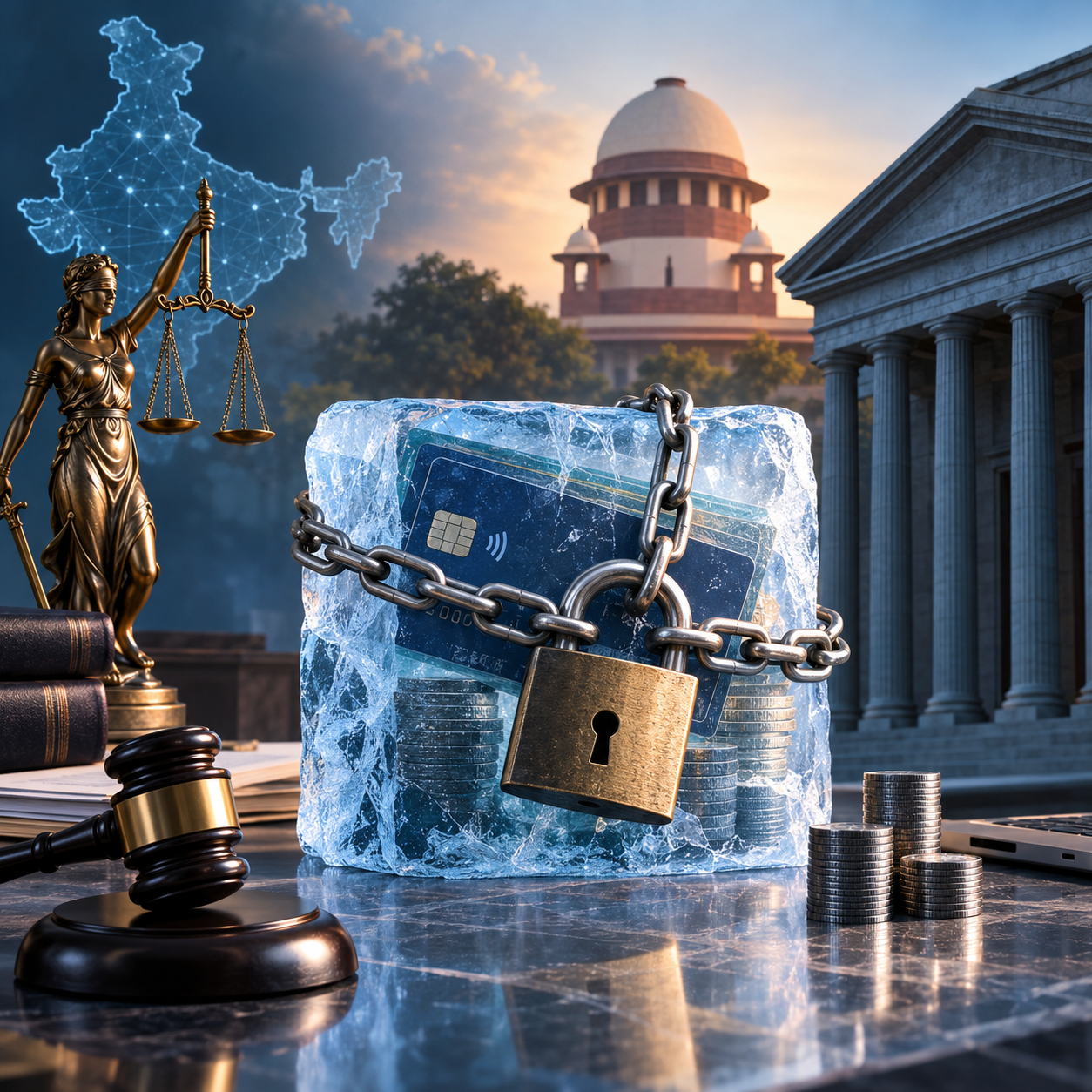
The freezing of bank accounts has become increasingly common in investigations involving cyber fraud, financial crimes, money laundering and digital transactions. While investigating agencies have powers to restrict the operation of bank accounts connected with suspected offences, courts have repeatedly emphasised that such powers must be exercised within the framework of law.

Contents
State of Maharashtra v. Tapas D. NeogyTeesta Atul Setalvad v. State of GujaratShento Varghese v. Julfikar HusenRecent Approach: Proportional FreezingWhat Does This Mean for Account Holders?Conclusion

With the Bharatiya Nagarik Suraksha Sanhita, 2023 (BNSS) now replacing the Code of Criminal Procedure, the corresponding provision is Section 106 BNSS, which broadly carries forward the seizure power previously contained in Section 102 CrPC.

State of Maharashtra v. Tapas D. Neogy

The foundational Supreme Court judgment on account freezing is State of Maharashtra v. Tapas D. Neogy, (1999) 7 SCC 685.

The Supreme Court held that a bank account constitutes “property” for the purposes of Section 102 CrPC. Consequently, an investigating officer can seize or prohibit operation of a bank account where there is a direct link between the account and the commission of an offence.

This decision established that police powers of seizure are not limited to physical property and can extend to financial accounts.

Teesta Atul Setalvad v. State of Gujarat

The Supreme Court reaffirmed the principles in Tapas D. Neogy in Teesta Atul Setalvad v. State of Gujarat, (2018) 2 SCC 372.

The Court recognised that a bank account can be seized or its operation prohibited where the investigating officer has material creating suspicion regarding its connection with the offence under investigation. Importantly, the Court also observed that Section 102 does not require prior notice to the account holder before the account is seized or frozen, since advance notice could potentially frustrate an investigation.

Shento Varghese v. Julfikar Husen

In Shento Varghese v. Julfikar Husen, (2024) 7 SCC 23, the Supreme Court considered the consequences of failing to report a seizure to the jurisdictional Magistrate “forthwith”, as required under Section 102(3) CrPC.

The Court held that delayed reporting does not automatically invalidate the seizure. The requirement to report serves an important procedural purpose, particularly in relation to the Magistrate’s control over the seized property, but delay does not by itself make the seizure void.

This distinction is particularly important in cybercrime investigations, where accounts may be frozen quickly to prevent further movement of suspected proceeds.

Recent Approach: Proportional Freezing

Recent High Court decisions demonstrate an increasing focus on preventing unnecessarily broad or indefinite account freezes.

In Sreeja Vikraman v. The Manager, South Indian Bank, the Kerala High Court directed that the freeze should be confined to the amount specified in the police requisition, allowing the account holder to operate the account beyond that amount. The Court also required the police to clarify whether the freeze needed to continue and directed compliance with the applicable reporting procedure.

Similarly, in Kamlesh Kumar v. State of Rajasthan, the Rajasthan High Court directed that the disputed amount allegedly transferred illegally into the account remain frozen while permitting the petitioners to transact with the remaining balance.

Other recent decisions have also emphasised that where the prescribed statutory procedure is not followed, an indefinite freeze may not be sustainable.

What Does This Mean for Account Holders?

These cases establish that account freezing is legally permissible, but it is not an unlimited power. An account holder whose bank account has been frozen may seek clarification regarding the basis and extent of the freeze and can approach the appropriate court where the action appears disproportionate, procedurally defective or unjustifiably prolonged.

At the same time, where an account has a genuine connection with suspected criminal proceeds, courts may allow the freeze to continue while the investigation is underway.

Conclusion

Indian case law strikes a balance between effective criminal investigation and protection against arbitrary deprivation of property. Tapas D. Neogy established the power to freeze bank accounts; Teesta Setalvad reaffirmed its application and clarified that prior notice is not necessarily required; and Shento Varghese clarified the consequences of delayed reporting.

Recent High Court decisions further indicate that targeted freezing of the disputed amount, rather than blanket freezing of an entire account, may be appropriate in suitable cases.

For individuals and businesses affected by an account freeze, understanding the statutory basis, the amount involved, the investigation and the procedural steps taken by the authorities is therefore essential when determining the appropriate legal remedy.


Share This Article
Facebook Whatsapp Whatsapp LinkedIn Copy Link
Previous Article Web3 and AI: Metaverse, IoT and Other Frontier Technologies
Next Article Case Laws on Bail in India: Key Judicial Principles
Leave a Comment Leave a Comment

Leave a Reply Cancel reply

Your email address will not be published. Required fields are marked *

Related Posts

Consent GuidelinesData PrivacyDPDP Act

Consent Guidelines under the DPDP Act, 2023: What Businesses Need to Know

Data PrivacyDPDP ActDPDP Act and Rules

Data Privacy in India: Understanding the DPDP Act, 2023 and DPDP Rules, 2025

Data Fiduciary ObligationsData PrivacyDPDP Act

Data Fiduciary Obligations Under the DPDP Act, 2023

Data PrivacyData Processor ObligationsDPDP Act

Data Processor Obligations Under the DPDP Act, 2023

Data PrivacyData Protection Board of IndiaDPDP Act

Data Protection Board of India Under the DPDP Act, 2023

Cross Border Data TransferData PrivacyDPDP Act

Cross-Border Data Transfer Under the DPDP Act, 2023

FacebookLike
XFollow
YoutubeSubscribe
TelegramFollow

You Might Also Like

Case Laws on ED and PMLA: Key Judicial Principles

6 Min Read

Case Laws on Bail in India: Key Judicial Principles

7 Min Read
One Step Law
Embark on a flavorful expedition through the rich history of coffee, from the velvety depths of a perfectly brewed espresso to the luxurious foam of a classic cappuccino.
  • Terms of Use
  • Contact Us
  • Privacy Policy
  • About Us
© 2026 One Step Law. All Rights Reserved.
Welcome Back!

Sign in to your account

Username or Email Address
Password

Lost your password?